
ReSource Waste Services says it has more than doubled its recovery of non-ferrous metals after replacing underperforming equipment with STEINERT eddy current separators. The New England company now operates six machines across five construction-and-demolition waste facilities in Maine, New Hampshire and Massachusetts.
The business processes about 650,000 tonnes of C&D material annually. Before the upgrade, frequent breakdowns forced operators to bypass separation, sending valuable aluminium, copper and other metals into the residual stream. That meant losing sales revenue while also paying disposal costs. The first replacement separator was installed in 2018.
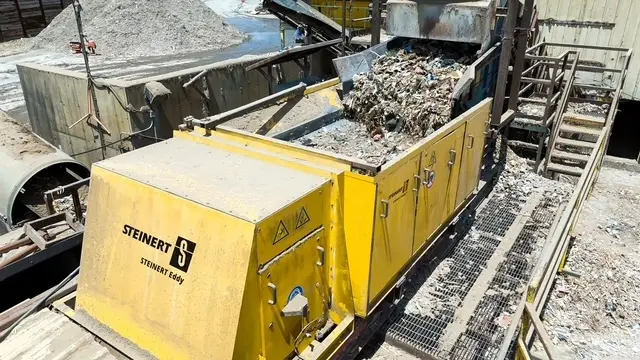
Across the company’s sites, recovered non-ferrous material rose from 0.4% of input to more than 1.4%. At ReSource Waste’s throughput, that change represents thousands of additional tonnes diverted from landfill. The first machine reportedly repaid its investment in around 15 months, three months faster than the original calculation.
Reliability has been as important as separation efficiency. One unit has operated for nine years without major maintenance, while local spare-parts support reduces the risk of extended bypass operation. The case illustrates why lifecycle cost matters more than purchase price in high-throughput sorting: uptime, recovery yield and service response directly determine both commodity revenue and disposal expenditure.
Source: Waste Management World