
Temporary working platforms are essential wherever heavy tracked piling rigs, cranes and similar equipment must operate on weak or cohesive ground. A platform failure can destabilise machinery and put people at serious risk, so its design must account for both the loads imposed by the plant and the actual behaviour of the subgrade.
Naue’s approach combines an unbound granular layer with geogrid reinforcement and, where required, a nonwoven geotextile separator. The geogrid improves load distribution and limits differential settlement, while the separator keeps the aggregate from mixing with fine-grained soil. This can increase bearing capacity while reducing the amount of quarried granular material needed.
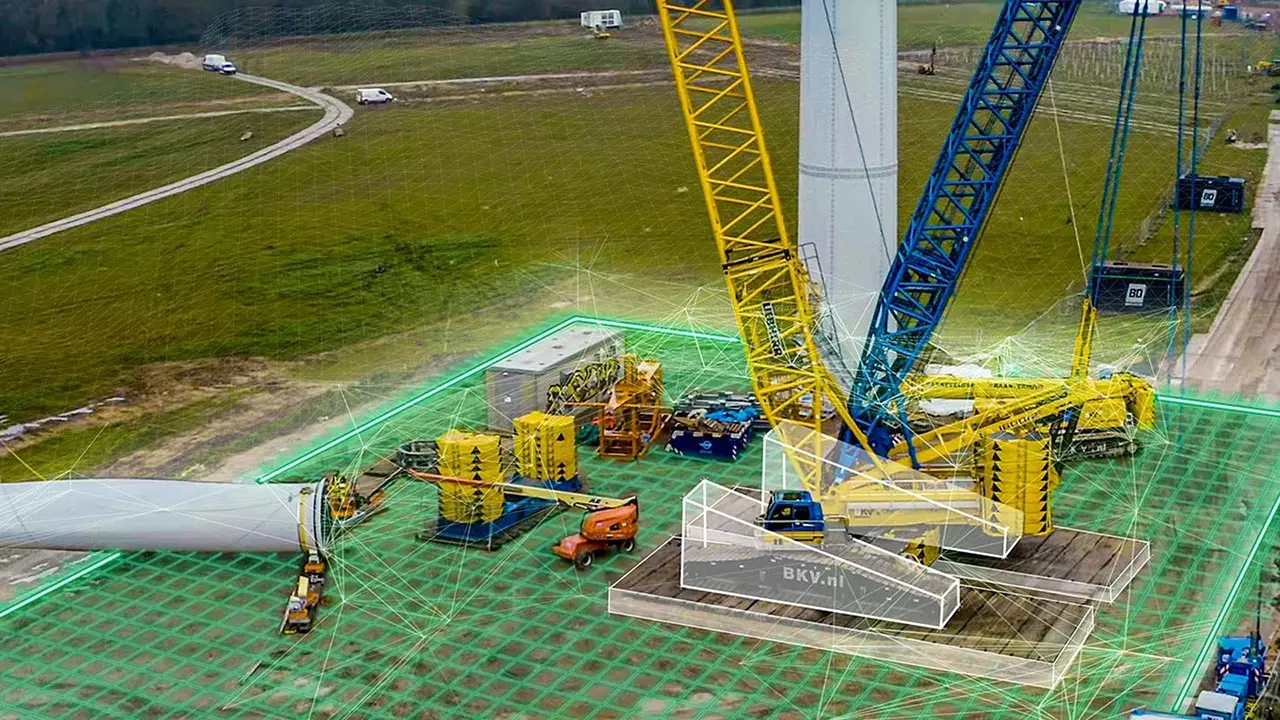
Large-scale laboratory and field trials with tracked equipment have helped validate systems using Secugrid and Combigrid. The findings were incorporated into Naue’s modified “Hybrid Method”, which builds on the BRE BR 470 approach to working-platform design and allows engineers to evaluate reinforced platform configurations more realistically.
The method is available through the Naue Platform design software on the company’s portal. Naue also notes that it is referenced in updated industry guidance published in 2025 by the Temporary Works Forum and by the European Federation of Foundation Contractors and Deep Foundations Institute. For contractors, the practical benefit is a design route that links operational safety with lower material use and improved resource efficiency.
Source: Naue