
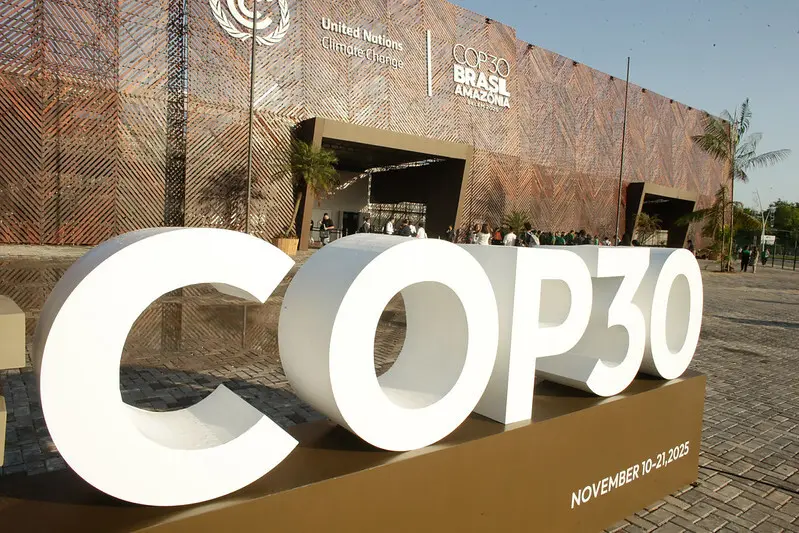
Kanadevia Inova took a straightforward message to COP30 in Belem: climate policy must include affordable infrastructure for municipal and organic waste. The company joined discussions in the conference’s Blue Zone on how waste-to-energy, biogas and other resource-recovery systems can reduce greenhouse-gas emissions while supporting circular use of materials.
The Swiss-based technology provider develops, operates and services waste-to-energy and biogas facilities worldwide. At COP30, its parent Kanadevia Corporation presented work on green hydrogen and e-methane, while Kanadevia Inova representatives joined sessions on sustainable supply chains, the Global Methane Pledge and waste-to-energy as a route to decarbonisation.
The core climate argument is methane avoidance. When biodegradable waste is landfilled, it can produce methane for years; collecting it for anaerobic digestion or diverting suitable residual waste to controlled energy recovery can replace unmanaged disposal and deliver usable energy. Modern projects can also recover metals and other materials, and increasingly consider carbon capture as part of longer-term decarbonisation.
Kanadevia Inova used the conference to highlight proven systems rather than distant concepts. It pointed to its move into European biogas investment and to a UK waste-to-energy carbon-capture project as examples of infrastructure already advancing. The wider challenge is to make such systems financeable and appropriate for local conditions, especially in regions where waste collection and treatment capacity still lag behind rapid urban growth.
Source: Waste Management World