
Hamburg’s relocated Wilhelmsburger Reichsstrasse required a foundation that could carry heavy road traffic across soft organic and peaty ground. The new route, combined with an adjacent railway line, was intended to remove a congested barrier through Wilhelmsburg while supporting long-term urban development.
The most sensitive section was the transition between a deep-founded bridge and the neighbouring embankment, where unequal settlement could damage the road. Engineers used a load-transfer platform combining rigid, pile-like inclusions with high-strength Secugrid geogrids and a load-distributing sand layer.
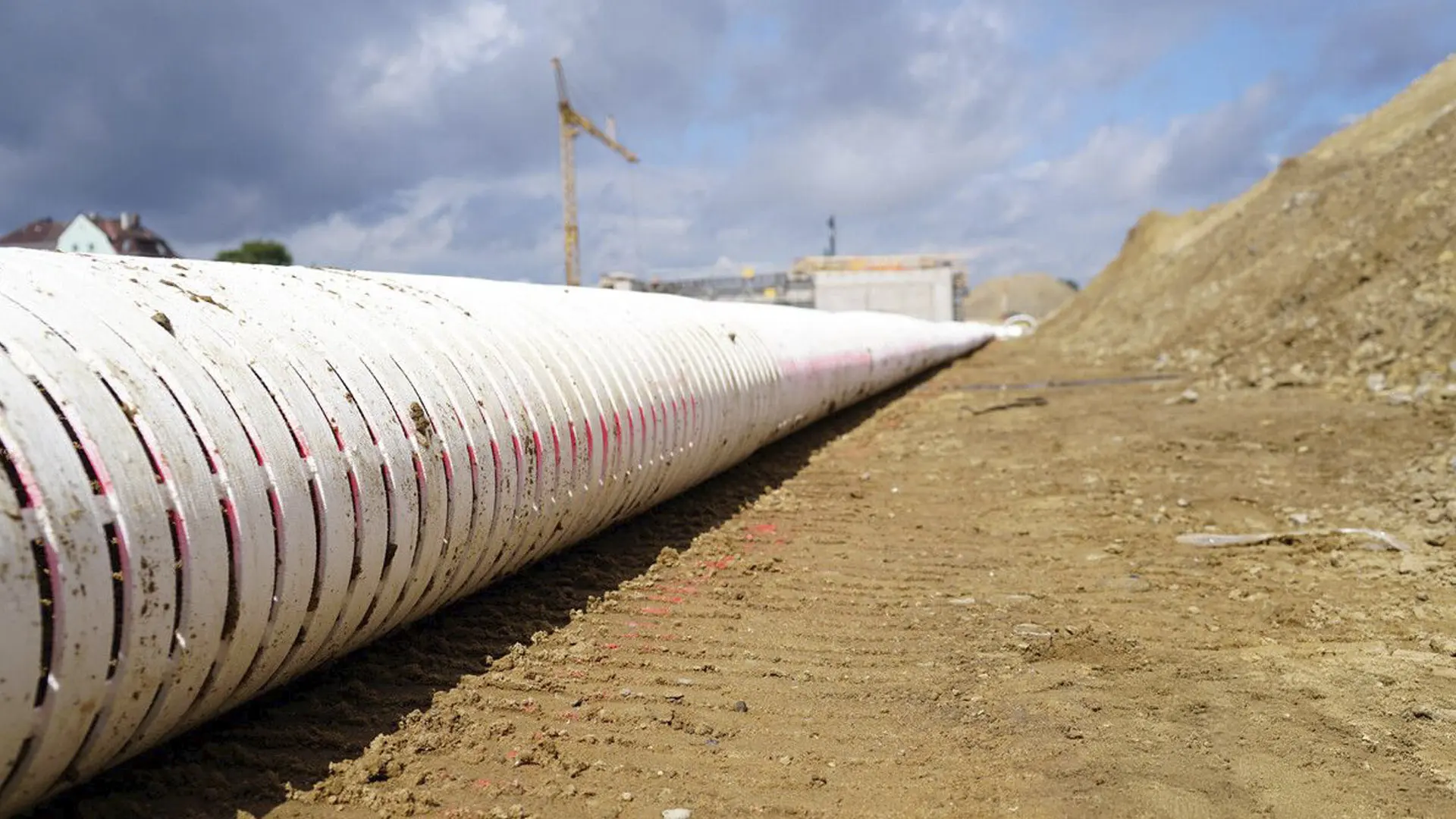
The inclusions transfer embankment and traffic loads into stronger soil, while two geogrid layers laid at right angles distribute stress across the platform. Nearly 32,000 square metres of customised geogrid were installed in constrained site conditions, with a design focused on very low long-term deformation.
Because the ground was improved by displacement and compaction, the method avoided excavating large volumes of weak soil for disposal. The route entered service in 2019 and now carries about 67,000 vehicles a day, illustrating how geosynthetics can reduce material movement while protecting infrastructure on difficult ground.