
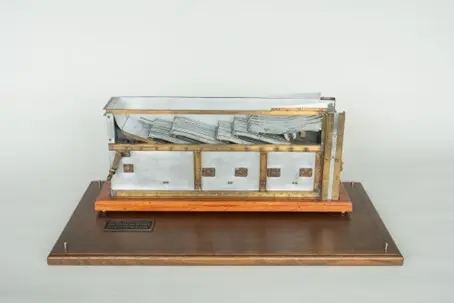
Modern grate-based waste-to-energy grew out of an earlier public-health need: cities had to reduce growing volumes of refuse and limit disease. By the early twentieth century, industry was also recognising waste as a fuel for steam production. In 1925, German engineer Josef Martin founded his own company around a new reverse-acting grate for difficult, low-grade solid fuels.
The design moves fuel against the main direction of travel, continually mixing and turning the bed to support stable combustion. Early orders came from Munich and international customers, and the grate was adapted in different widths and configurations. After the Second World War, waste again became central to the business as oil displaced coal and rising prosperity produced much larger municipal waste streams.
Environmental rules and the value of recovered energy steadily expanded the system beyond the grate itself. MARTIN developed complete thermal-treatment packages covering combustion control, boilers, flue-gas cleaning and auxiliary equipment. Its current portfolio ranges from simpler horizontal layouts to individually controlled grate zones designed for fuels with very different moisture content and calorific value.
The company’s present “chute to stack” approach also includes digital monitoring, artificial-intelligence tools and options for carbon capture. Large installations can combine several grate runs, process more than 1,000 tonnes per day on a single line and supply electricity, industrial steam or district heat. A century after the original patent, the basic mechanical principle survives inside a much broader system focused on efficiency, emissions control and reliable treatment of non-recyclable residual waste.
Source: Waste Management World